Friday, August 25, 2017

The Hunua Range

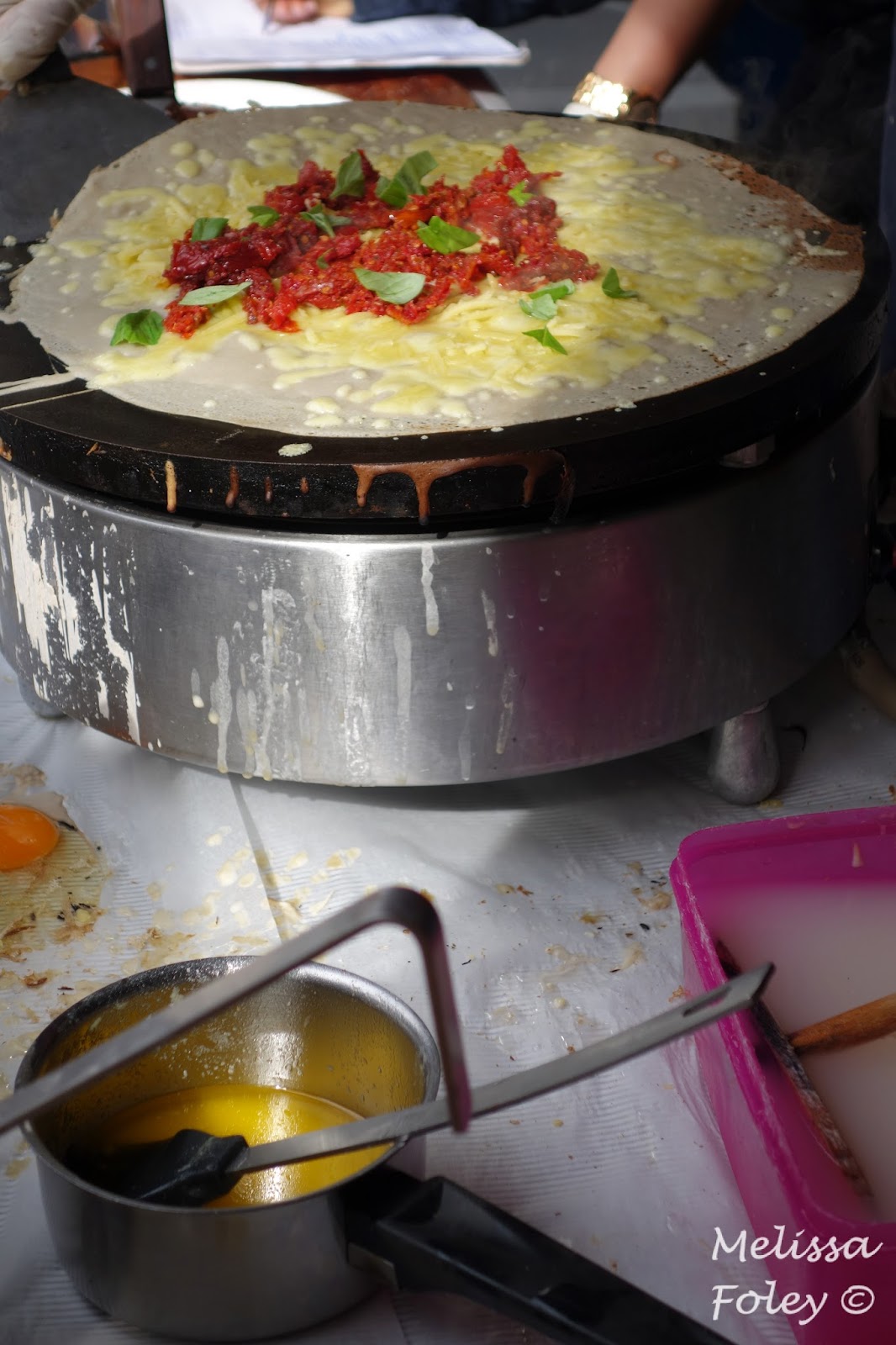
A couple weekends ago we explored the far southeast corner of the Auckland region. Our first stop was the Clevedon Market, one of the best-rated farmers markets around Auckland. The market is about 20 km south of the city center and is far enough away and remote enough that Pete was starting to doubt that there would even be a market. When we arrived, the place was packed. Because it is still winter, there is actually very little produce at any of the farmers markets we have visited. This market was no different. There was one produce stall and one plant stall, and the rest were food vendors or specialty products. Our plan for the market was to find lunch for a hiking picnic, so the mix of stalls was perfect. They even had gluten-free crepes for me!


not the lightest hiking snack...

From the market, we continued further south to the Hunua Range. The Waitakere and Hunua ranges contain the largest swaths of native forest and also supply Auckland with much of its drinking water. Many of the tracks in the Hunuas were damaged by massive flooding in March, but we were still able to piece together a nice hike that included a waterfall, stream crossing, dam, and lots of hills. 

Hunua Falls

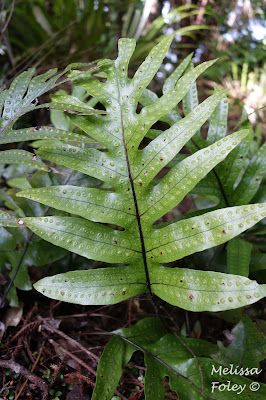
kidney fern - one of my favorites

native trees lining the trail

cool bark patterns

the Cossey reservoir

hound's tongue fern

water spillway or entrance to the center of the earth?

The photo below is of a kill trap for possums. There were a number of these close to the trail in one area. Possums were introduced from Australia (the only mammal native to NZ is the bat) and love it here...which is a bit ironic because they are endangered in Oz. Anyway, the possums are terrible beasts here because they eat the eggs and chicks of native birds. There are a number of birds here that are flightless (they didn't evolve with mammals so had no reason to fly), making them even easier pickings for the possums. A lot of money is spent in this country trying to get rid of possums (and other mammal pests) and the entire country is trying to be pest free by 2050. One of the most effective ways to reduce the possum population is to drop a pesticide into infested areas. As you can imagine, that is controversial, but it also isn't a good method around water. Enter the kill traps. What intrigued me about the traps is the bait they use. It seemed so obvious after seeing it, but if you had asked me what they used as bait, I never would have guessed. If you look closely at the photo you will see an egg. No cheese, peanut butter, or poison. Just an egg, one of the possums favorite foods. 

Monday, August 7, 2017

spring is coming!

One good thing about moving to the southern hemisphere on the winter solstice is that our days are getting longer, and we get to see the landscape bloom into spring for a second time this year. California had a pretty spectacular spring, but any burst of color on the landscape--small or large--is always a welcome sight for me. The daffodils have bloomed in our backyard and magnolia trees across the city are starting to blossom. 

Last weekend we walked through the city to the Domain, the oldest city park in Auckland and one of over 50 remnant volcanoes in the city. The Domain is home to the Auckland Museum, which we visited again, but it is also home to the Wintergardens. The gardens are comprised of a fernery and two glass houses that display temperate and tropical plants. Both houses were in full bloom and the rich colors took the edge off the chill in the air. 


the tropical house has a fantastic collection
of carnivorous plants, like this pitcher plant

this plant is not for touching!

giant water lillies


Tuesday, August 1, 2017

A hike in the Waitakere Range

Since we have been in NZ, the weather pattern has been such that we get sunshine every other weekend. The weather changes very quickly here so you have to take advantage of the clear skies when you get the chance. Last weekend after signing the lease to our new flat (more on that after we move in), we headed just west of Auckland to the Waitakere (pronounced why-tack-ery) for a hike in Cascade Kauri regional park. The Waitakeres are a mostly undeveloped area that lie between the edge of Auckland and the west coast beaches. 

It has been raining quite a bit here so Pete chose a walk that was partially on a paved trail and partially along a tram route. The trail led from the car park down to Waitakere Dam, one of five dams in the Waitakeres that collectively provide about 25% of Auckland's water. At 25 meters tall, the dam was an impressive structure.

Walking across the top of the dam

Looking up at the spillway

Native vegetation at the foot of the dam

The base of the dam gives way to a spectacular waterfall


Tramway to the dam and the water pipe that
takes water from the dam to the treatment plant

Walking through a soggy tunnel along the tramway.
A much needed trail umbrella

There was a lot of native vegetation along the trail.
This is the native Nikau Palm.


This is a stump from a tree fern.
Not very good for Pete's woodworking
projects, but so cool!

Scalloped bark of the tree fern

The NZ International Film Festival started in Auckland this week. Neither of us have been to showings at a film festival before, but Pete recognized a movie that he was interested in and it was showing at a theatre that is usually a venue for musicals and plays. The decor of the Civic Theatre in downtown Auckland is reportedly amazing, so our tickets to the show doubled as an inexpensive way to see the inside of the theatre. It is a beautiful theatre! We just found out there is an Andy Goldsworthy documentary showing on the weekend as part of the film festival, so we will be back for round #2!

The elephant and buddha bedecked foyer
(there are 414 elephants in the entrance area)

There is a pair of lions protecting the stage...
their glowing blue eyes are a tad freaky.

Beautiful stage curtain and parapets 
rising to meet the starry sky.

And today, I got to go into the field for the first time! I tagged along on a stream sampling run to the southern sites. It was really good to see some of the sites we monitor. I've done most of my research in relatively isolated coastal areas. The work we do for the Auckland Council is crazy impacted by humans. We had a couple of really lovely sites today, including one reference site that is meant to represent good water quality conditions. Others, however, were not in such good shape. One stream smelled like cow poo, many looked like chocolate milk, and one was threading through a mall parking lot. Hopefully the data we collected today will help make a case for improving how we manage streams as Auckland continues to grow. 

One of our less impacted urban sites.


Thursday, July 20, 2017

The Coromandel in a Wish called Wanda

Last weekend we took our first trip in the Wish called Wanda to the Coromandel Peninsula, about two hours due east of Auckland. On a clear day, we can see the Coromandel from our office window, but it is on the other side of the Hauraki Gulf so you have to go south and then north to go east. 

Our first stop was a hike out to Cathedral Cove. It is a popular destination even in winter and it is no wonder why. It is a beautiful location from the car to the beach. The trail rolls up and down along the coast for about 30 minutes before a set of stairs takes you down to the beach where white rock formations rise from the sea. The rock is called ignimbrite, a mixture of pumice and ash produced when volcanoes erupted 8 million years ago, that has since been weathered by wind and waves. 


the local charismatic megafauna (limpet)

 This stretch of the coastal ocean is protected in a marine reserve.
Next time we will have to bring our snorkeling gear!

We could have lingered at Cathedral Cove for hours, but our next stop was time critical. We hiked back to the car, drove about 15 minutes to our camping spot for the night, and then grabbed our shovels and towels and walked out to Hot Water Beach. The name is quite apt for this spot...or better yet it might be called Scalding Water Beach. This locale is one of a handful in New Zealand where hot water from thermal vents is pushed to the surface of the earth. The hot water usually mixes with ocean water immediately, but for a couple hours on either side of low tide, this hot water is flowing down the beach. What would any reasonable person do with all that hot water? Dig a hole and make your own spa pool, of course! 

This place is a SCENE when low tide comes around. We arrived about an hour before low tide and there were already dozens of people lounging in their pools, others were still digging pools, and still others (like us) were taking in the scene while trying to find just the *right* place to dig a hole. The flow of hot water is really patchy so you cannot just dig a hole anywhere. But you don't want to infringe on someone else's pool or weaken their structure, so the whole process takes some time. 

Walking along the beach to scope out our pool location was a bit surreal. We would walk along the beach with the sand cool under our feet and then all of a sudden we would hit a hot patch and have to run so we didn't burn our feet. The water is insanely hot! We finally settled on a place where we could balance the temperature of our pool using a stream of cool water on one side and hot water on the other. Our pool was partially dug out already, but we expanded and shored up the walls a bit to get the full experience. Regulating the temperature was a bit more finicky than we had hoped, but we did enjoy our very own spa pool on the beach, complete with a beautiful sunset.

Pete scoping out the scene and deciding if this
abandoned pool would suit our needs (it did not)

digging our pool

Part of the reason we decided to buy a Toyota Wish is because all the back seats fold flat and it is long enough for us to lay down in it, which could come in handy while we adventure around the country. New Zealand allows "Freedom Camping," which essentially allows you to camp on public land even if there isn't a designated campground. Some areas of the country are clamping down on this practice, though, because it has been abused. In areas where it is still allowed, though, Wanda can be our shelter. 

Freedom camping is not allowed in many places on the Coromandel Peninsula, so we booked ourselves a spot at the local Holiday Park. We could sleep in Wanda but also had access to hot showers, toilets, and cooking facilities. We currently only have our sleeping bags and mats for camping gear, so this arrangement was perfect for our first outing. 

We snuggled into our sleeping bags at 9 pm and I finally decided to get up around 8 am...so we will call it a success! We had the windows open for ventilation but had to close them during the night because it was quite cold outside. There was ice on the outside of the van when we got up!

cozy and warm in my pile of fleece and down
(my sleeping bag is my happy place!)

After a leisurely start to our day, we continued our counter-clockwise loop around the Coromandel. The roads are narrow and winding, but the scenery is lovely. Green hills, native forest, beaches, and ocean all from one vantage point. Our goal for day 2 was to find some kauri trees for Pete. I had seen them on previous trips, but they were new giants to him. 

The kauri is an ancient tree, evolving over 20 million years ago while New Zealand was still connected to Australia. The New Zealand kauri is only found at the northern end of the North Island and is one of three species of Agathis remaining in the world. The kauri is one of the largest and fastest growing trees in the world. Its ability to grow quickly is what has allowed it to survive amongst the more recently evolved trees, called angiosperms (almost all non-conifer trees in the U.S. are angiosperms...it means flowering/seed bearing tree). The kauri is the third largest tree in the world, after the two sequoia species (giant sequoia and redwood)that we know well from our time in California.

Like many hardwood tree species, the kauri was nearly logged into oblivion in the 1900s. One look at it will tell you why foresters loved this tree. It is tall, wide, straight, and the branches start very close to the crown. The grove we visited was spared for reasons largely unknown. Whatever the reason, these trees have reached their adolescence at the age of 600 years. They are beautiful trees and quite good for hugging. 


dried foliage from the kauri tree


They survived the logging, but a new danger is facing kauri trees in NZ. A fungus-like disease started killing kauris in 2008. The disease attacks the tree via the roots and disrupts its ability to carry food and water through its cells. At this point, nearly all kauris that get infected die. The disease is spread via soil so the Department of Conservation has a massive campaign going to get people to clean their shoes before visiting kauri habitat. We scrubbed our boots and disinfected them at the beginning of the trail at a DOC-installed station. 

In addition to the kauri, NZ native forests are filled with all kinds of amazing trees and plants. NZ broke away from the super continent Gondwana 85 million years ago so many of its plant species evolved in isolation from other populations. As a result, many of the plants (and animals) are only found in NZ. The forests in NZ are classified as temperate, but they have the look and feel of a tropical forest. The tall trees, like kauri, form the canopy and hardy understory trees like palms and tree ferns fill in below. The ground is covered in ferns and shrubs and epiphytes climb nearly every vertical surface. Walking through the native bush feels like being dropped into a scene from Jurassic Park. A pterodactyl flying overhead would not seem strange at all.

native forest filled with ferns

tree fern with epiphytes on its trunk

A couple other sites from our trip...

Waiau Falls

 Coromandel town mural

We made it back to Auckland without incident. It was great to get out of the city for the weekend! We will probably do some local adventuring for the next couple of weekends while we try to find a place for us and our container full of stuff to live. 

Monday, July 10, 2017

First weeks in New Zealand

We may need to change the name of this blog to "from the far east" because these posts are now coming from Auckland, New Zealand, which lies to the east of the International Date Line. For many of you reading this blog, we are nearly a full day ahead of you. And yes, #45 is still president tomorrow. Sorry. 

I landed in Auckland on June 20th and Pete followed about a week later. We are settling in well and getting the bits and bops of life down here sorted out, including learning our "kiwi-isms." We are living at a friend's house until the end of August while she is away, and it has been perfect for our transition time. It is about six miles from the city center, which we traverse via train every day. Our commute is about 50 minutes each way, including 15 minute walks on either side of the 20 minute train ride. It is a really nice way to start and end the day, and we are both enjoying our train reading time. 


Our flat is close to a lot of useful amenities. The grocery store is a three minute walk from the house or in route from the train station. There are more shops than anyone could need at the Sylvia Park mall near the train station and lots of restaurants around too. My favorite food location so far is the Tuesday night market just up the hill from us. There are around 15 food vendors, mostly asian, ranging from Thai to Korean to Island bbq. The market apparently moves to a different neighborhood around the city every night. Yum!


Our office is in downtown Auckland on the 24th floor of an old bank building. We have a fabulous view over the city but the building is a bit fancier than a typical science office. The elevator doors are plated in gold on some of the floors! As promised in our contracts, tea, coffee, and hot chocolate are provided free of charge, but our office does not gather for a proper tea. Pete's team does gather for breakfast every morning and lunch whenever a critical mass of people are in the office. Pete got to go into the field his second day at work and has been to numerous sites since then. He is definitely getting a better sense of the region at this point than I am. I was in Christchurch for a conference for my third week of work, though, so I should not complain. We were officially welcomed to our new workplace with a Māori welcoming ceremony called a mihi whakatau. We were essentially passed from one side of the room to the other to join our colleagues in our new roles. It was a really nice ceremony and our first official hongi (forehead and nose pressing).

Our view over part of the city. The windows on the other side 
look out over the harbor and gulf islands. We have been 
seeing many amazing rainbows over the last two weeks!

The emergency exit from the 24th floor is a bit daunting.

One of the sampling sites Pete visited

I got to see many familiar faces and meet some new
ones at the NZ Marine Sciences conference in Christchurch

A very kiwi mural in Christchurch

Away from work, we've seen good friends and have been trying to get out and see a bit of our new home. We've already had a visitor! He is here for work, but we managed to connect for dinner, so we'll take it! Thanks, Brennan! And Pete watched his first rugby game with a friend over the weekend. It ended it a tie, which seems lame. 

We got our membership cards for the Auckland public library straight away. One of the 55 branches is close to work so we will be able to take advantage of their collection (but only 35 items at a time...), as well as access their e-books and other online offerings. 


We learned that our library card doubles as our free entrance pass to the Auckland Museum and the Maritime Museum. We checked out the new nature photography special exhibit at the museum last weekend but are saving the rest for visitors... 

Auckland Museum

The winter solstice marked the start of a the Māori new year celebration so there were festivities happening around the city. Last weekend we went to see some of the best kapa haka, traditional Māori song and dance, from the Auckland area. The Māori were fierce warriors and I have to say that their haka definitely would have kept me out of their territory! 


A few other iconic sites that we see most days on our way to work:

 Town hall

The sky tower is at the other end of our block

Our big news for the week is that we purchased a car! She's a 2004 Toyota Wish...a wagon-minivan hybrid. She is long enough to sleep in, giving us a backup sleeping option when we go out exploring. We are going to take her out for a spin this weekend to the Coromandel Peninsula. 

Name to be determined...