the main reason for our trip to southern france this summer was to boat along the canal du midi with our friends andrew and jenny. the canal du midi was an engineering feat built during the 17th century under orders from the sun king (louis xiv) in an effort to connect the atlantic ocean to the mediterranean sea so ships didn't have to travel along the iberian peninsula (coast of portugal), a favorite hang-out spot for pirates. pierre-paul riquet was the mastermind behind the project that many others had attempted. he succeeded because he was the first to solve the issue of keeping enough water in the canal from top to bottom. he designed an intricate system for bringing water from the mountains to reservoirs that could be used to supplement the canal at key points along its route. the canal is about 150 miles long and has 63 locks to help smooth the 600 feet of elevation change from one end to the other. we traveled around 90 miles of the canal in ten days and traversed 41 locks. there were two things that surprised me about the canal: 1. the canal is six feet deep at most, and because of sediment accumulation over time and low water in the summer, the depth was closer to four feet. 2. very few, if any, of the boats on the canal have a septic holding tank on board, which means the canal du midi could also be called the canal du merde. no swimming for us!
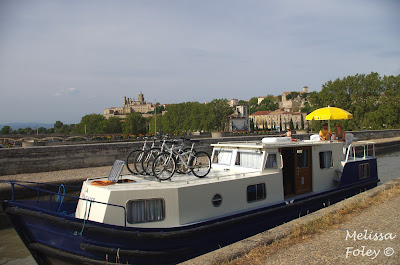
we rented a 36 foot boat for ten days, starting in the city of capestang. we spent a week on a sailboat with andrew in jenny a few years ago, so we were not concerned about the close quarters. we kept our same assignments as in croatia...captain andrew, engineer pete, public relations director (and french speaker) jenny, and steward melissa. our boat came with bicycles, which were great for getting around the canal-side towns. our boat - the moissagaise - was a beast but a great platform for our travels. the requirements for renting a boat are surprisingly minimal, but we did get a thorough briefing and short test drive, which is much more than we could say about our experience in croatia.
our starting point is located midway through what is referred to as "the pound" - a thirty mile stretch of the canal that has no locks, so we didn't encounter our first set of locks until day 2. that first set was a doozy - seven in a row! the fonserannes staircase takes the canal down about sixty feet into the orb river valley. after the staircase, you cross one of the most amazing parts of the canal...a bridge of water (the canal) over water (the river orb)! one more lock takes you down to the town of beziers, the birthplace of the canal architect, riquet.


our boat had a maximum speed of about 5 mph...so we were not going anywhere fast. in addition, the locks are only open from 9 to 7 with a break for lunch from 12:30 to 1:30, so you have to plan accordingly. the next stop may only be 12 miles away, but if you have to go through five locks in that span, it could take most of the day, particularly if there are a lot of boats trying to get through the locks. a lock keeper runs the locks, but each boat is responsible for handling their own lines during the locking process. with our crew of seasoned captains, the ropes were no problem. things did sometimes get a little squirrelly in the locks if your fellow lock mates (usually two more boats) were not good line handlers. we also strived to keep our ropes out of the poo-water, but hand washing after every lock was a required activity for all crew members.


i was going to talk about some of the villages we passed through, but i think this is enough for now...
we rented a 36 foot boat for ten days, starting in the city of capestang. we spent a week on a sailboat with andrew in jenny a few years ago, so we were not concerned about the close quarters. we kept our same assignments as in croatia...captain andrew, engineer pete, public relations director (and french speaker) jenny, and steward melissa. our boat came with bicycles, which were great for getting around the canal-side towns. our boat - the moissagaise - was a beast but a great platform for our travels. the requirements for renting a boat are surprisingly minimal, but we did get a thorough briefing and short test drive, which is much more than we could say about our experience in croatia.
our starting point is located midway through what is referred to as "the pound" - a thirty mile stretch of the canal that has no locks, so we didn't encounter our first set of locks until day 2. that first set was a doozy - seven in a row! the fonserannes staircase takes the canal down about sixty feet into the orb river valley. after the staircase, you cross one of the most amazing parts of the canal...a bridge of water (the canal) over water (the river orb)! one more lock takes you down to the town of beziers, the birthplace of the canal architect, riquet.

our floating home for ten days

starting into the locks in the fonserannes
staircase - seven locks in a row
staircase - seven locks in a row

looking back up the staircase. the locks are oval
in shape because it makes them stronger and able
to resist the inward pressure of the surrounding soil.
in shape because it makes them stronger and able
to resist the inward pressure of the surrounding soil.

tending lines and getting ourselves through the locks.

the orb ecluse (lock) is the tallest single lock
we went through - 6.1 meters (~18 feet) up from
here to the next section of the canal
we went through - 6.1 meters (~18 feet) up from
here to the next section of the canal

bridge of water over water!!! the river orb is flowing
beneath the canal du midi. so cool.
beneath the canal du midi. so cool.

the orb aqueduct (bridge for water)

la moissagaise with beziers in the background
(nice parasol, eh?)
(nice parasol, eh?)

close quarters in the lock
despite what was in the water, the scenery along the canal was quite lovely. the distant rolling hills were a nice backdrop to the vineyards along the canal. the banks of the canal were historically lined with sycamore trees--called plane trees in france--to provide shade from the hot sun and reduce evaporation of canal water. the trees contracted a fungus in the mid-1940s likely from contaminated ammunition boxes brought over by U.S. troops. the fungus spread quickly to trees along the canal via the ropes people used to tie their boats to trees along the way. as a result, many of the trees have been cut down and burned to prevent further spread of the fungus. there are a few sections where the trees are still healthy, which were a welcome relief from the 90+ degree days.

vineyards along the canal

healthy plane trees

a stand-alone giant
(if you look closely on the opposite bank,
you can see the new trees that have been planted)
(if you look closely on the opposite bank,
you can see the new trees that have been planted)

shady parking spots along the canal were in high demand
we went through 41 of 63 locks in our journey. at each lock, there is a lock-keepers house and sometimes a store or cafe. all of them are a bit different except for the placard giving the name of the lock and distances to the next locks up- and downstream. the shortest distance between locks is 300 feet; the longest distance is 30 miles. i took more photos of the locks than a person will ever need, but they are just so interesting!

waiting for the water to empty out of
the lock so they can open the gates
and let us into the lock
the lock so they can open the gates
and let us into the lock

favorite lock-side store scene

lock keepers house

water coming through the gates to fill the lock

an example of the placard at every lock location

riding the water elevator up a few floors

a rare solo journey through a lock
(tying up at the back of the lock was preferential
when possible because the water comes in so fast that
you get sprayed...in the face...with poo-water)
(tying up at the back of the lock was preferential
when possible because the water comes in so fast that
you get sprayed...in the face...with poo-water)

pete manning the bow rope

the formidable lock gates
in addition to the locks, there were many other interesting architectural works along the canal. we probably passed under ~100 bridges (watch the parasol!), drove by dozens of spillways used to irrigate crops and moderate the water level in the canal, crossed a handful of additional aqueducts (water over water) and went through the 570 foot long malpas tunnel, the first canal to pass through a tunnel.

one of the many bridges we passed under (barely)

the argent-double spillway

emerging from the malpas tunnel
i was going to talk about some of the villages we passed through, but i think this is enough for now...


